Articles
Media
E-mail Discussion Lists
Books and DVDs
about karisable.com
Home
Site Map
DNA - Forensics
Homicide
Green River Killer
Historic Crime
Organized Crime
Hate Crimes
Sex Crimes
Juvenile Crime
Child Abuse
Domestic Violence
Unsolved Cases
Missing Persons
Victims
Mental Illness
Elder Abuse
Punishment
Law Enforcement
Drug Wars
White Collar Crime
Media & Crime
Computer Crimes

cover

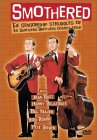
Smothered - The Censorship Struggles of the Smothers Brothers Comedy Hour -- The tribulations of Tommy and Dick Smothers and their popular late-'60s television show are detailed in Maureen Muldaur's interesting 92-minute documentary. Viewing the clips from The Smothers Brothers Comedy Hour , one might find it hard to imagine that they were considered controversial at the time; indeed, the jabs at censorship, gun ownership, the Vietnam war, and more seem mild by today's raunchy standards. But controversial they were, especially to CBS, who aired (and eventually canceled) the Smothers' show. Turns out that Tommy, the "dumb" one, was in fact a gadfly who turned the program into a cause célèbre somewhat beyond its actual significance; and in the end, as one of the talking heads featured here points out, it was the Smothers' decreasing sense of fun that really doomed it. Both brothers are interviewed, as are writers Rob Reiner and Steve Martin and others. DVD extra features include bios and an excerpt from a book on the subject. --Sam Graham

Crime and Law in Media Culture
by Sheila Brown
The whole of society is embraced by media culture. From globalism to cyberworlds, a critique of the relationship between crime, law, media and culture.

Rich Media, Poor Democracy: Communication Politics in Dubious Times by Robert Waterman McChesney
The contradiction between a for-profit, advertising-saturated, corporate media system and the requirements of a democratic society. As a citizen, he favors government subsidies for nonprofit journalism, antitrust litigation aimed at media conglomerates, and regulation of corporate broadcasters.

Changing Images of Law in Film and Television Crime Stories (Politics, Media & Popular Culture, V. 7.) by Timothy O. Lenz

Criminal Visions: Media Representations of Crime and Justice
by Paul Mason

Crime in the City: The Official Anthology of the Crime Writers' Association by Martin Edwards (Editor), Lindsey Davis

Cultural Expressions of Evil and Wickedness: Wrath, Sex, Crime (At the Interface / Probing the Boundaries 3)
by Terrie Waddell
A study of the nature of evil in the West. The international academics explore moral transgression in contemporary art, media and literature. As the old news media axiom, if it bleeds it leads, extends to the larger popular culture.

Who's Who in Crime & Mystery Writing
by Rosemary Herbert Here mystery expert Herbert brings together enlightening and entertaining information on classic and contemporary characters and authors.

"There is an odour to any Press Headquarters that is unmistakable.. the unavoidable smell of flesh burning quietly and slowly in the service of a machine." -- Norman Mailer

"It is difficult to get a man to understand something when his salary depends upon his not understanding it." -- Upton Sinclair

"Before the Government tries to convict someone, they try first to demonize him." Trial lawyer Gerry Spence
Google
 
Web KariSable.com

Media Violence & Children

1st Amendment & the Press

First Amendment Rights

Reasons that create disgust

Scott Peterson's Trial by Media

Television News Archive -- The collection at Vanderbilt University is the world's most extensive and complete archive of television news with more than 30,000 individual network evening news broadcasts from major U.S. national broadcast networks: ABC, CBS, NBC, CNN, and more than 9,000 hours of special news programming including ABC's Nightline since 1989. These special reports and broadcasts cover presidential press conferences, political campaign coverage, and national and international events such as the Watergate hearings, the plight of American hostages in Iran, the Persian Gulf war, and the terrorist attack on the US on September 11, 2001.

Organizations which address issues of the media, democracy and public policy.

Journalism and Media Criticism

International Communication Division of the Association for Education in Journalism and Mass Communication

Alternative Resources on the US "War Against Terrorism"

Jacksonville Media Watch

Cites research at UCLA which suggests verb voice affects how harshly we judge criminals. Studies found most newspaper articles use violent verbs like 'rape' and 'murder' in the passive voice and men who read these stories written in the passive voice attributed less blame to the perpetrator and less harm to the victim than the active-voice versions.

New York Times Scandal -- Who's the opposite of Jayson Blair, the New York Times reporter accused of inventing sources and quotes, plagiarizing and other sins? Judith Miller is a veteran Times star whose job is to interact with the best and the brightest in science, academia and government. The New York Times spanking for running a strangely sourced article justifying the administrations retreat from claims raq possessed large stores of weapons.

Newsweek disclosed the Bush Administration suppressed information exculpating Iraq, information from the same source cited by the Administration as confirming Iraq had developed weapons of mass destruction since the Gulf War. Newsweek chose to underplay it, perhaps out of a belief that truth-twisting is no longer news.

Blunt Words About the Soft Press -- CNN struck Serbian journalists as amateurish, shallow, and speculation crazy compared to the BBC. Fox News Channel sounded like the rabidly nationalistic, pro-Milosevic propaganda Serbs are trying to flush out of their system.

Lord Jeffrey Archer jailed at Old Bailey but is still entitled to attend the House of Lords and make laws. He was sentenced to 4 years for lying at his 1987 libel trialagainst the Daily Star newspaper, which he besmirched others reputations and won money. But Lord Archer stays in an open prison, works in a theatre, signed a new book deal worth 10 million, goes home for the weekend and attends parties.

20 Reasons Not to Trust the Journal Editorial Page Fair.org

Changing Local News

Prosecutors vs. Journalists: The Gloves Are Off

Attacks on the Press in 2001

How Rupert Murdoch uses his media power to hammer his foes -- Murdoch uses diverse holdings, newspapers, magazines, sports teams, a movie studio, and a book publisher, to promote his own financial interests at the expense of real news, journalistic ethics, legal and regulatory rules. He wields media as instruments of influence with politicians. Murdoch. demonstrates the dangers of mass power being concentrated in few hands.

Nationalistic pressure makes it hard for journalists to do their job. Journalists must distance themselves from emotions. And distinguish between patriotism, love of ones country, and nationalism, the exalting of ones nation, its culture and interests above all others.

The Contrarians -- There are reasons why news people are encouraged to excel only within conventional bounds. But there are good reasons for celebrating freethinkers and mavericks. They play a critical role.

The Freedom Forum Narrows its Vision, the once high-flying nonprofit found itself, plunging from a high of almost $1.1 billion, to a low near $700 million, losing more than a third of its value

The Biker Who Shot Me: Recollections of a Crime Reporter by Michel Auger -- September 13, 2000, Michel Auger was walking from his car when he was shot in the back 6 times. Auger, a crime reporter for 30 years, covered mafia trials and corruption scandals, notorious murders and government inquiries. He has interviewed Alvin "Creepy" Karpis, member of the Ma Barker gang, and Montreal drug dealer Lucien Rivard, who escaped from Bordeaux jail while awaiting extradition to the US. He travel led to the Far East where the drug trade begins, and Sicily where he traced the origins of organized crime. He has an interest in the criminal activities of biker gangs, the Hells Angels and their rivals, the Rock Machine.

Hugo Arriazu, 23, celebrity photographer, convict number 3109601357, sharing a single cell and 3 toilets with 50 of the worst at Rikers Islands?

When the English version of Bjorn Lomborg's The Skeptical Environmentalist, the state of the earth's ecosystems, was published, The New York Times, Washington Post, The Wall Street Journal, The Economist, and other publications gave thumbs-up to the professor, who dismissed environmental concerns as "phantom problems" created by self-serving environmentalists.

APTS: Association of Public Television Stations -- Lobbies in the interests of noncommercial TV.

Picturing Justice - Justice and law in the media.

"Terrorists" Attack Ski Lodges, Not Doctors -- Politically motivated crimes receive different media attention. Fair.org

Crime Contradictions -- Research suggests there is no more violent crime today than 20 years ago. There is more crime coverage. Fair.org

Breaking a Taboo, Editors Turn to Images of Death -- 1994, a University of Wyoming freshman was shot in the head at and left to die. The Laramie Daily Boomerang shoved it in the community's face, printing a front-page photograph.

The Cato Institute Health and Welfare Studies -- Many factors contribute to the rise in juvenile violence from the glorification of violence in the media to the failure of the "war on drugs." Testimony of Michael Tanner Director of Health and Welfare Studies TheCato Institute Before the: Senate Judiciary Committee Subcommittee on Youth Violence June 7, 1995

Did 'The Jerry Springer Show' Cause a Murder? -- The Jerry Springer Show with Nancy Campbell-Panitz - Ralf Panitz, the man accused of killing his ex-wife just hours after the estranged couple appeared on The Jerry Springer Show, was arrested. apbonline

The naked schemer of "Survivor" answers to child abuse charges -- with a confession.

Alan and Judith Kilshaw paid $12,000 to an Internet baby broker for twin girls. The Internet is a marketplace for buying and selling children.

The contract Ronald Reagan arranged is known as "The Great Giveaway." It only provided residuals for actors in films made after 1960. The studios kept everything before 1960, worth billions of dollars. MCA had recently purchased Paramount Pictures's film library in 1959. (Lawyer and Mafia mouthpiece Sidney Korshak, close friend of Lew Wasserman, was directly involved in negotiations with Reagan.) In 1962, the Justice Department filed a federal antitrust suit against MCA, SAG (Screen Artists Guild) was charged as a coconspirator. Reagan was the subject of criminal and civil investigations by the FBI and a federal grand jury in Los Angeles. A Justice Department memorandum quoted, "Ronald Reagan is a complete slave of MCA who would do their bidding on anything." Reagan was subpoenaed to testify before the grand jury, February 5, 1962, but failed to recall details of his role in the 1952 SAG-MCA blanket-waiver decision . Federal prosecutors convinced Reagan perjured himself repeatedly, subpoenaed Reagan and his wife's federal income-tax returns for 1952 to 1955.

When Will Media See the Connection? -- When the OKC bombing captured the attention of the mainstream media, women's rights activists expected that the attack would end media's reluctance to report on violence against abortion providers and domestic terror threats. Fair.org

Kari & Associates
PO Box 7372
Olympia, WA 98507

June 17, 2008

Copyright Kari Sable Burns 1994-2008

/fb.htm

Search Now:
In Association with Amazon.com

Crime News

PBS

Television - PBS
Media Watch
-PBS
Evening NewsPBS
Morning News PBS


True Story: Murder, Memoir, Mea Culpa by Disgraced New York Times writer Michael Finkel recounts the murderer who assumed his identity and examines his own fall from journalistic grace, in 2002, at the Times, Finkel, was fired for fabricating a story about a child laborer in Africa.. As the story of his downfall become public, he learned Christian Longo, was arrested in Mexico for the murder of his wife and three small children in Oregon, had been living under an assumed identity: Sensing a story-Finkel contacted Longo, initiating a relationship that became complex over the course of Longo's trial and conviction. Finkel makes no excuses for his actions. Nor does he deny his own narcissism--a narcissism that allowed him to rationalize his own lies as surely as Longo rationalized his crimes. Ultimately, Finkel says, his year with Longo taught him "how a person's life could spiral completely out of control; how one could get lost in a haze of dishonesty; and how these things could have dire consequences." The lesson, Finkel need not add, applies as much to the disgraced writer as it does to the killer.

Bernard-Henri Levy's Who Killed Daniel Pearl? a harrowing look at Pearl's life and tragic death. Levy June 17, 2008 Eu June 17, 2008 Street Journal reporter Pearl and the circumstances that led to his murder in Pakistan; traces a thread from Pearl's killers through Pakistan's Inter-Services Intelligence and, possibly, to Al-Quaida. At great personal risk, he follows the same steps that Pearl walked to the very farm house where the journalist was killed. Pakistan "has lost even the very idea of what a free press could be." Pearl: "a man who was ordinary and exemplary, normal and admirable." It is about a good man who died too soon as well as the terrible alliances that could perform such an act against him. Levy does not want Pearl's lessons to be lost to the world. He, like Pearl, seeks a "gentle Islam" that will resist the ring of blood and hate in what Levy calls "the beginning of the grand struggle of the century." --Patrick OKelley

Investigative Reports - Tabloid! Inside The New York Post -- This documentary portrays the Post, as a competitive news organization that runs analytical business coverage to vicious celebrity mudslinging. "We're a tabloid and that means we cover news through people and personalities, more than through abstract issues," says a staff writer for the Post. "Calamity" Sam Costanza, a crime photographer on the prowl for fires, muggings, and juicy murders; Richard Johnson, a gossip columnist with a vendetta against actor Alec Baldwin; and Managing Editor Marc Kalech, who proudly proclaims, "We attack people who need attacking." Sure, it's somewhat bizarre to witness such a huge collection of egomaniacs, hard-core journalists, and shallow columnists cranking out stories that have the barest resemblance to anything called news. However, Tabloid ties together a host of seemingly unrelated subplots and creates a compelling portrait of New York's most controversial newspaper.

Prime Time Crime: Balkan Media in War & Peace by Kemal Kurspahic -- Kurspahic tells how media malfeasance stirred up ethnic hatreds that led to the bloody Balkan wars of the 1990s. Independent journalists risked their lives in an effort to tell a balanced story.